Germany
German tanks & panzers
From the tractors of the clandestine 1920s to the Tiger II, 31 German armoured vehicles with specifications, variants, combat history, sources and photographs.
Rearmament in secret, 1919-1938
The Treaty of Versailles banned Germany from owning tanks at all, so the first designs were built as agricultural tractors and tested in the Soviet Union at the joint Kama school near Kazan. When rearmament became open in 1935 the first two Panzers were frankly training machines: the machine-gun-armed Panzer I and the 20mm Panzer II. Neither was meant to fight a war, and both did so anyway, in Poland, France and the opening months of Russia.
Blitzkrieg, 1939-1941
Heinz Guderian's doctrine mattered more than any single vehicle: tanks concentrated in their own divisions, with radios in every turret and infantry and artillery keeping pace. The workhorses were the Panzer III, built to fight other tanks with a 37mm and later 50mm gun, and the Panzer IV, originally a short-barrelled support tank for knocking out strongpoints. Czech designs absorbed after 1939, above all the 38(t) chassis, filled out the divisions and went on to carry a decade of German self-propelled guns.
The T-34 shock and the heavy cats, 1941-1943
Sloped armour and a 76mm gun on the Soviet T-34, and 75mm of armour on the KV-1, made most of the German fleet obsolete in a single summer. The response was a crash programme: the Panzer IV rearmed with a long 75mm, the Tiger I rushed into service in 1942 with 100mm of frontal armour and the feared 88mm KwK 36, and the Panther, which copied the T-34's sloped plates and paired them with a high-velocity 75mm that out-shot almost everything it met. The Tiger II followed in 1944, superbly protected and badly overweight.
Turretless economy, 1943-1945
As industry came under bombing, casemate vehicles won out: no turret ring, less machining, a bigger gun on a smaller hull. The StuG III became the most-produced German armoured vehicle of the war, the little Hetzer armed infantry divisions with a 75mm anti-tank gun, and the Jagdpanther mounted the 88mm of the Tiger II on a Panther chassis. Alongside them ran the self-propelled artillery — Wespe, Hummel, Brummbär — and the anti-aircraft Flakpanzers that became essential once the Luftwaffe lost the sky.
Paper panzers and dead ends
Germany also spent scarce capacity on vehicles that fought little or not at all: the 188-tonne Maus, of which two hulls were built; the Ferdinand, whose petrol-electric drive broke down repeatedly at Kursk before survivors were rebuilt as the Elefant; and, a war earlier, the K-Wagen, a 120-tonne First World War landship cut up unfinished in 1918. Each is in the archive, labelled as a prototype or one-off rather than presented as service equipment.
Every German vehicle in the archive
Medium Panzers
4 recordsThe tanks that did the fighting: Panzer III, Panzer IV and the Panther.
 WW2
WW2Panzer III
1939 - 1945Germany · Medium
Germany's intended main battle tank of the early war and the vehicle in which panzer crews learned their trade.
Gun37 mm KwK 36, later 50 mm KwK 38/39 or 75 mm KwK 37
 WW2
WW2Panzer IV
1939 - 1967 (foreign service)Germany · Medium
The only German tank in production from the first day of the war to the last, and the workhorse of the panzer divisions.
Gun75 mm KwK 37 L/24, later KwK 40 L/43 and L/48
 WW2
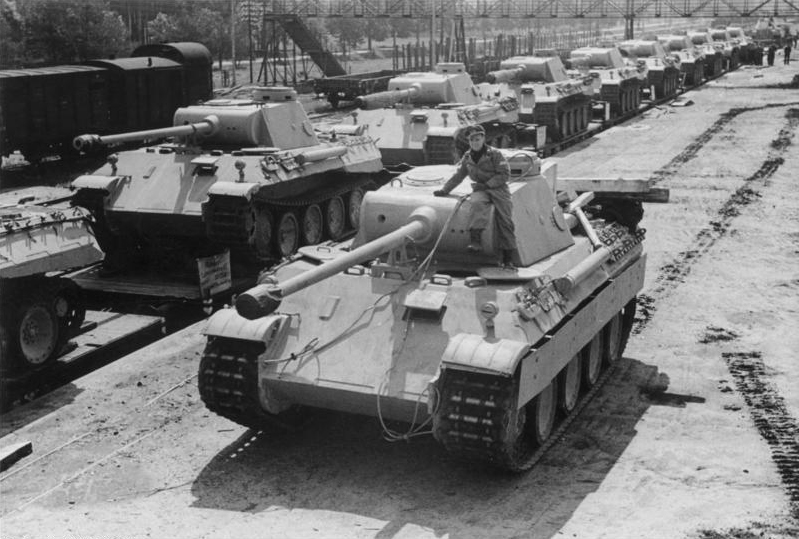
WW2Panther (Panzer V)
1943 - 1950s (French service)Germany · Medium
Germany's direct answer to the T-34 and arguably the best balance of firepower, protection and mobility of the war.
Gun75 mm KwK 42 L/70
 WW2
WW2Panzerbefehlswagen III (Command Tank)
1938 - 1945Germany · Medium
The Panzer III turned into a command tank: extra radios, a map table, and on early versions a wooden dummy gun.
Gun1 x dummy or 3.7 cm gun depending on version
Heavy Panzers
4 recordsTiger I, Tiger II and the super-heavy projects that never reached the field.
 WW1
WW1K-Wagen (Grosskampfwagen)
- - -Germany · Heavy
Never finished: a 120-tonne breakthrough machine designed to be shipped to the front in sections.
GunFour 77 mm guns in side sponsons
 WW2
WW2Tiger I
1942 - 1945Germany · Heavy
Thick armour, superb optics and the 88 mm gun made the Tiger the most feared tank of its day - and a maintenance nightmare.
Gun88 mm KwK 36 L/56
 WW2
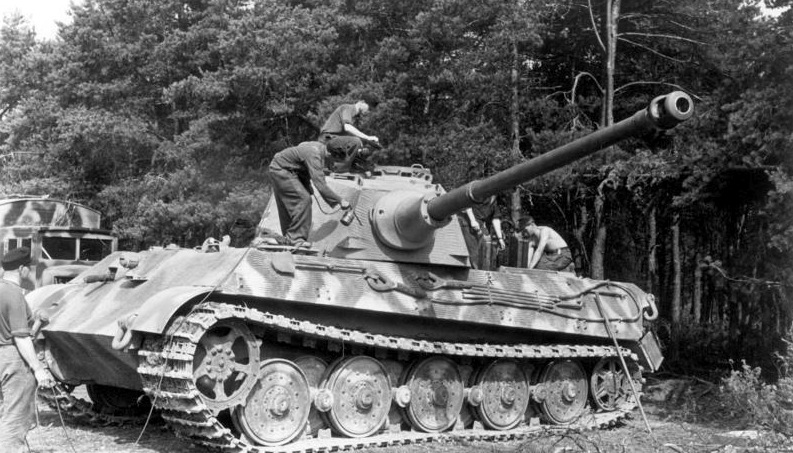
WW2Tiger II (Konigstiger)
1944 - 1945Germany · Heavy
The heaviest German tank to see mass service, combining Panther-style sloped armour with the long 88.
Gun88 mm KwK 43 L/71
 WW2
WW2Panzerkampfwagen VIII Maus
- - -Germany · Heavy
The heaviest armoured vehicle ever built and tested - too heavy for almost any bridge in Europe.
Gun128 mm KwK 44 L/55 with coaxial 75 mm
Light Panzers
3 recordsThe training machines of the 1930s, pressed into front-line service.
 Interwar
Panzer I
1934 - 1941Germany · Light
A machine-gun-armed training tank that nonetheless spearheaded Germany's first blitzkrieg campaigns.
Gunnone
 Interwar
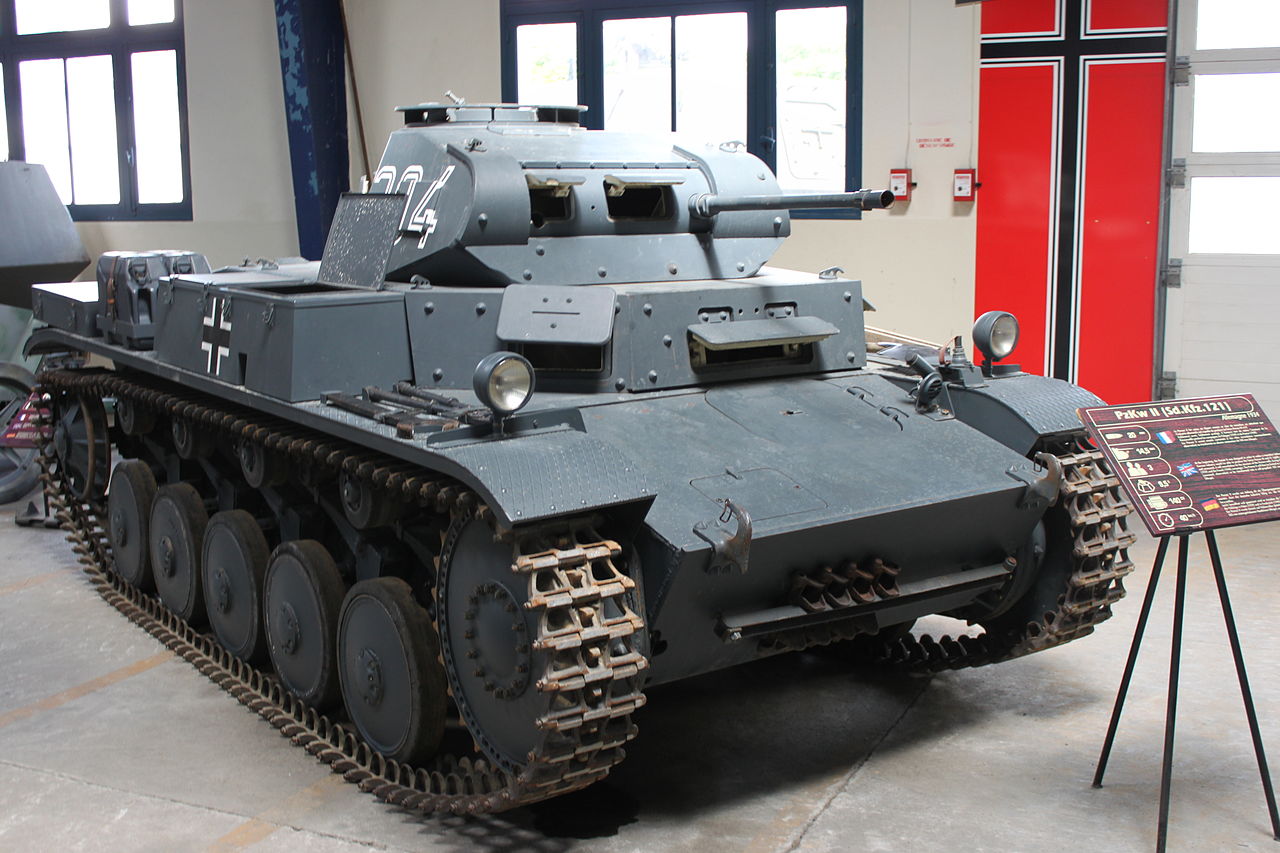
Panzer II
1936 - 1943Germany · Light
Stopgap light tank that formed the backbone of the early blitzkrieg divisions.
Gun20 mm KwK 30 or 38 autocannon
Panzer I Ausf. F (VK 18.01)
1942 - 1944Germany · Light
A Panzer I name on an 80 mm-armoured infantry-assault machine - the heaviest two-man tank ever fielded.
Gun-
Tank Destroyers (Panzerjager and Jagdpanzer)
11 recordsOpen-topped gun carriers and fully armoured casemate hunters.
 WW2
WW2Jagdpanther
1944 - 1945Germany · Tank Destroyer
Panther hull plus the 88 mm Pak 43 - arguably the best-balanced tank destroyer of the war.
Gun88 mm Pak 43/3 L/71
 WW2
WW2Jagdpanzer IV
1944 - 1945Germany · Tank Destroyer
Low-slung Panzer IV derivative designed as a pure ambush gun platform.
Gun75 mm Pak 39 L/48, later Pak 42 L/70
 WW2
WW2Jagdpanzer 38 Hetzer
1944 - 1950sGermany · Tank Destroyer
Small, cheap, heavily sloped tank destroyer built on the Panzer 38(t) chassis.
Gun75 mm Pak 39 L/48
 WW2
WW2Marder II (Sd.Kfz. 131)
1942 - 1945Germany · Tank Destroyer
An obsolete Panzer II chassis with a 75 mm anti-tank gun bolted on top - crude, open-topped, effective.
Gun75 mm PaK 40/2
 WW2
WW2Marder III (Sd.Kfz. 138/139)
1942 - 1945Germany · Tank Destroyer
The Panzer 38(t) turned into a gun carrier, first with captured Soviet guns, then with the PaK 40.
Gun76.2 mm PaK 36(r) or 75 mm PaK 40
 WW2
WW2Nashorn (Hornisse, Sd.Kfz. 164)
1943 - 1945Germany · Tank Destroyer
The long 88 on a lightly armoured chassis - a sniper that killed at ranges nothing else could reach.
Gun88 mm PaK 43/1 L/71
 WW2
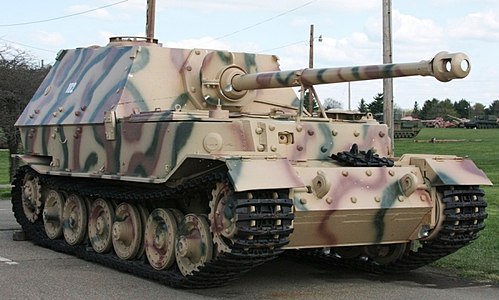
WW2Panzerjager Tiger (P) Elefant
1943 - 1945Germany · Tank Destroyer
Porsche's losing Tiger hulls rebuilt into a 200 mm-thick tank destroyer that dominated at range and broke down everywhere else.
Gun88 mm PaK 43/2 L/71
 WW2
WW2Panzerjäger I
1940 - 1943Germany · Tank Destroyer
The first German self-propelled anti-tank gun: a Czech 4.7 cm gun bolted onto an obsolete Panzer I chassis.
Gun1 x 4.7 cm PaK (t)
 WW2
WW2Panzer IV/70 (V)
1944 - 1945Germany · Tank Destroyer
The Jagdpanzer IV rearmed with the Panther long 7.5 cm gun: lethal at range, nose-heavy and hard on its front suspension.
Gun1 x 7.5 cm PaK 42 L/70
Jagdpanzer 38(t) Starr
Never fully entered service - 1945Germany · Tank Destroyer
A simplified Hetzer with the gun mounted rigidly in the hull to save parts and time. Only a handful were completed.
Gun1 x 7.5 cm PaK 39 L/48
 WW2
WW2Ferdinand
1943 - 1943Germany · Tank Destroyer
The petrol-electric Porsche heavy tank destroyer as it fought at Kursk, before rebuilding turned it into the Elefant.
Gun88 mm PaK 43/2 L/71
Assault Guns and Self-Propelled Artillery
7 recordsDirect-fire support and mobile howitzers built on Panzer chassis.
 WW2
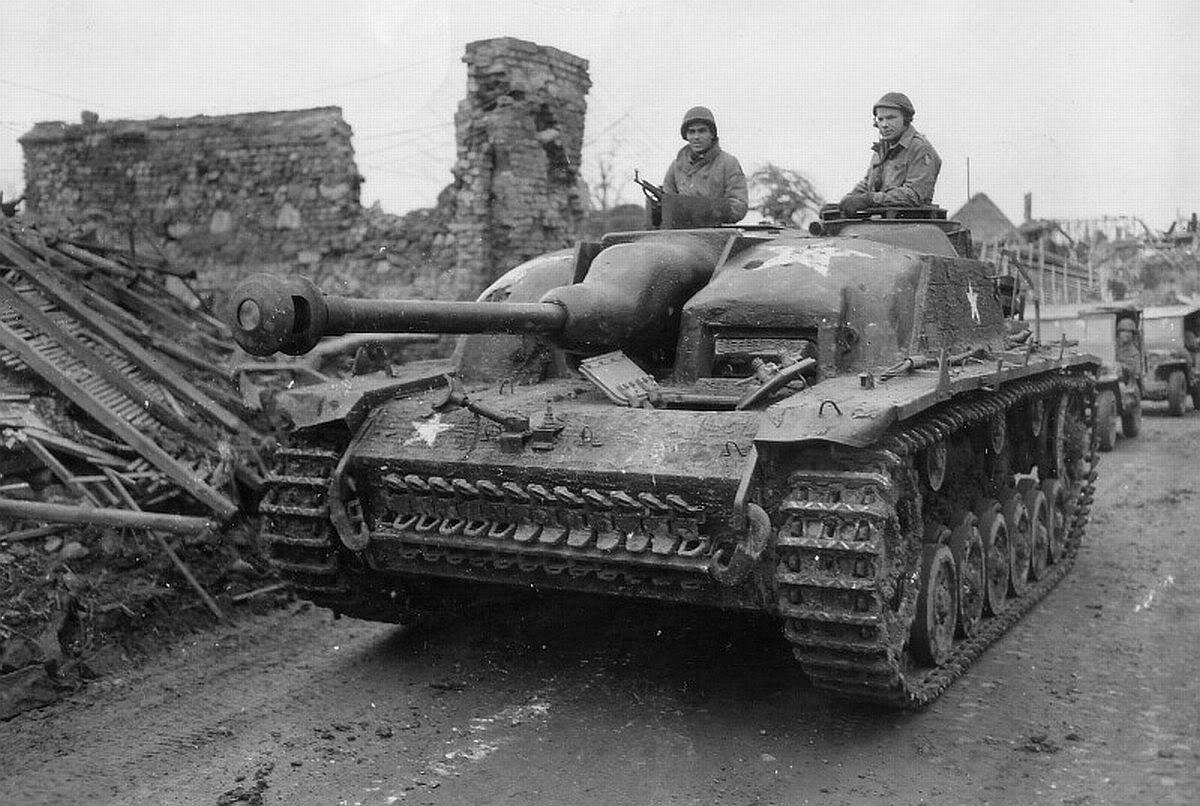
WW2StuG III
1940 - 1967 (foreign service)Germany · Tank Destroyer
A turretless assault gun on the Panzer III chassis that became Germany's most-produced armoured fighting vehicle.
Gun75 mm StuK 37 L/24, later StuK 40 L/48
 WW2
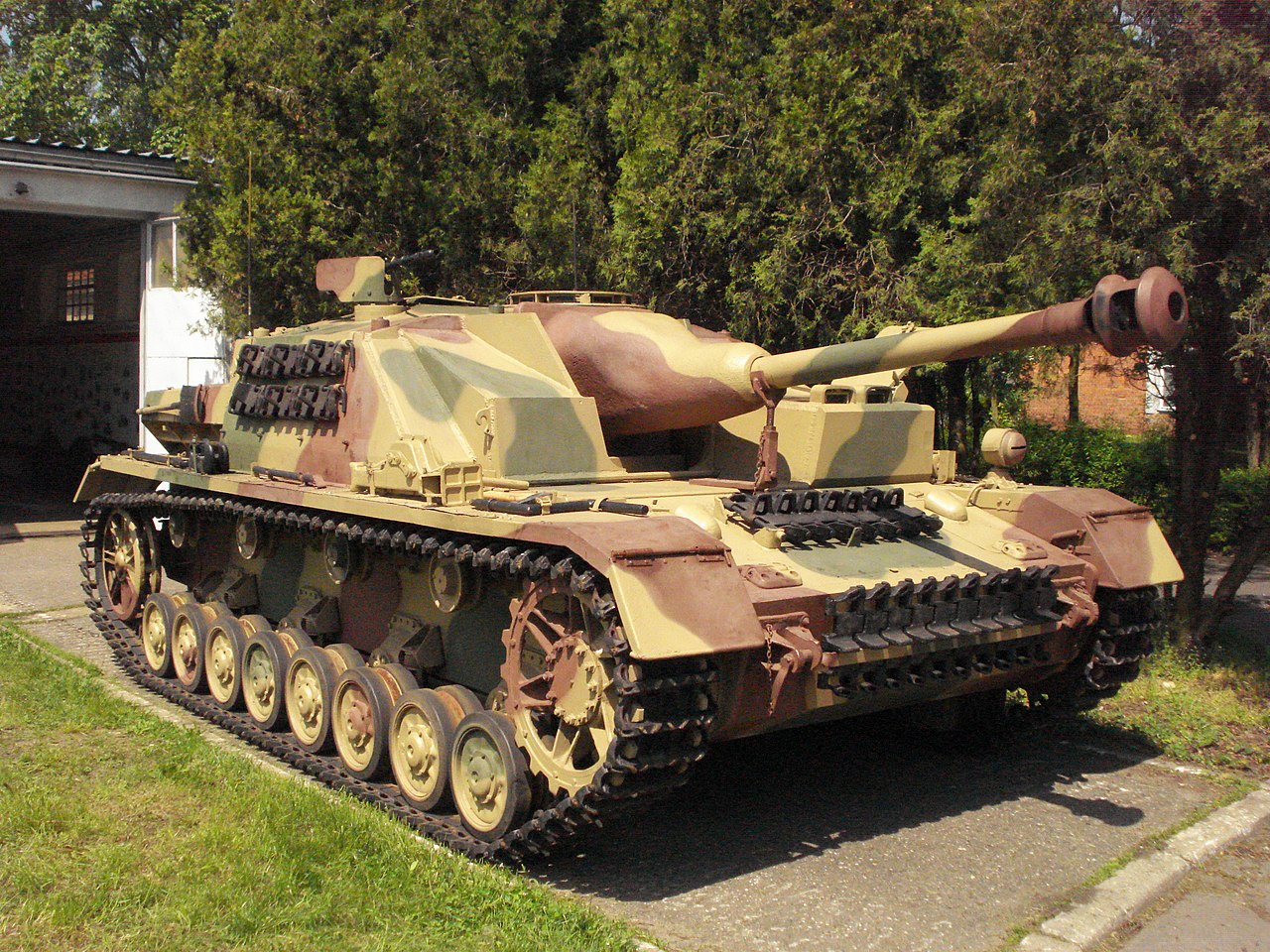
WW2Sturmgeschutz IV
1943 - 1945Germany · Tank Destroyer
StuG III superstructure on a Panzer IV hull, built after bombing hit StuG III production.
Gun75 mm StuK 40 L/48
 WW2
WW2Wespe (Sd.Kfz. 124)
1943 - 1945Germany · Tank Destroyer
The Panzer II as a self-propelled field howitzer - light, reliable, and the mainstay of Panzer artillery.
Gun105 mm leFH 18 howitzer
 WW2
WW2Hummel (Sd.Kfz. 165)
1943 - 1945Germany · Tank Destroyer
Heavy self-propelled 150 mm howitzer on the shared Panzer III/IV chassis - German divisional firepower on tracks.
Gun150 mm sFH 18 howitzer
 WW2
WW2Sturmpanzer IV Brummbar
1943 - 1945Germany · Tank Destroyer
A 150 mm howitzer behind 100 mm of armour, built to blast buildings apart at close range.
Gun150 mm StuH 43 L/12
 WW2
WW2Sturmtiger (Sturmmorserwagen 606/4)
1944 - 1945Germany · Tank Destroyer
A Tiger I hull carrying a naval anti-submarine rocket launcher - eighteen built, one shot could level a block.
Gun380 mm RW 61 rocket mortar
 WW2
WW2Sturmpanzer I Bison
1940 - 1943Germany · Tank Destroyer
A 15 cm infantry gun and its whole carriage dropped onto a Panzer I hull behind a tall steel box. Crude and effective.
Gun1 x 15 cm sIG 33 heavy infantry gun
Anti-Aircraft and Reconnaissance
2 recordsFlakpanzers and the armoured cars that scouted ahead of the divisions.
 WW2
WW2Flakpanzer IV Wirbelwind
1944 - 1945Germany · Light
A quadruple 2 cm anti-aircraft mount in an open-topped turret on a Panzer IV hull, built to keep fighter-bombers off tank columns.
Gun4 x 2 cm Flakvierling 38
 WW2
WW2Sd.Kfz. 234/2 Puma
1944 - 1945Germany · Light
A wheeled eight-wheel armoured car with a real tank turret and 900 km of range - listed here as reconnaissance, not a tank.
Gun1 x 5 cm KwK 39/1 L/60